 Doodlebark
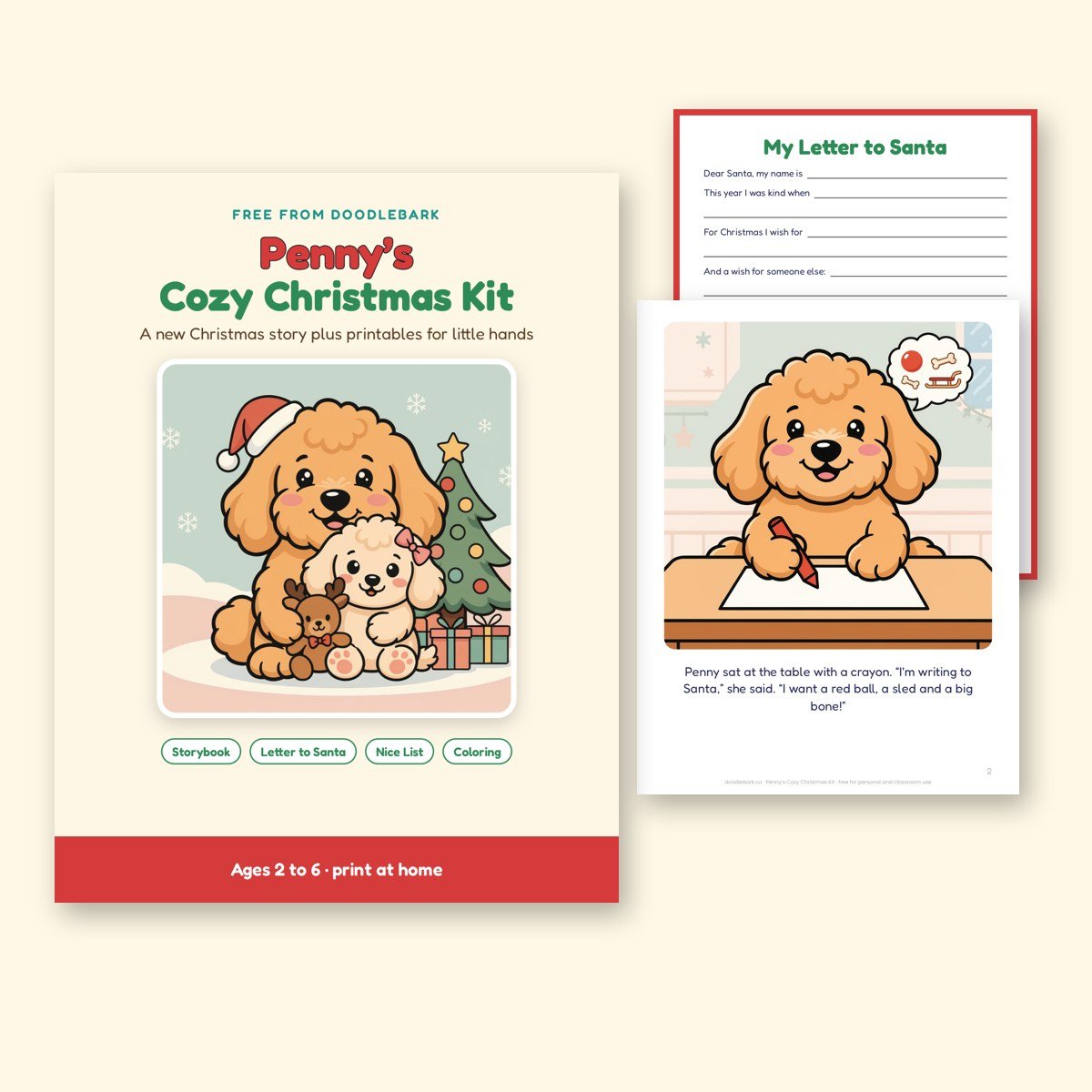
We know how hard it is when your little one just won’t stay in bed at night. It’s all about setting gentle, steady boundaries that respect your toddler’s need to feel in control. Our printable bedtime charts and storybooks, starring Penny the goldendoodle, help turn the nightly routine into a calm, screen-free ritual. This makes bedtime feel safe and predictable, so your child is more likely to stay put.
Why does my toddler keep getting out of bed?
When your toddler keeps leaving bed at night, it’s not about misbehaving. Theyre exploring new limits as they grow. The crib used to keep them safe and contained, but once its gone, they see the open room as a place to wander. Most toddlers find this freedom new and exciting, which makes staying in bed a real challenge.
What makes them want to leave the bed?
Toddlers naturally test boundaries. It’s how they learn about the world. During this stage, their desire to be independent grows big. Leaving the bed becomes a small way for them to show they have some control in a day full of grown-up rules.
Why can leaving the crib make things harder?
The crib acted like a fence, keeping them inside. Without it, toddlers often start to explore right away. You might find your child in the hallway, living room, or even next to your bed multiple times a night. This isn’t defiance; it’s curiosity and a need to feel reassured.
Bedtime struggles can really wear on us as parents. Giving in or showing frustration only makes things tougher. Staying calm and consistent is key. Using a stay in bed chart can help set clear expectations. Pair it with a visual guide like a bedtime routine chart for toddlers to show the steps of the evening. When your toddler keeps getting out of bed, remember its about their development, not discipline. Clear limits and steady follow-through help them feel safe to stay in bed.

How can a bedtime routine help my toddler sleep?
A steady bedtime routine helps your toddler get ready to sleep. When we follow the same simple steps every night, our children get clear signals that bedtime is coming. Without this, bedtime stretches into arguments and back-and-forth.
Experts say the bedtime routine is the first thing to look at when sleep is tricky. The steps before sleep matter more than we might think. A calm, repeatable pattern helps your child’s body and brain know its time to rest.
What should a good bedtime routine include?
A routine works well because it takes the guesswork out of the night. Your child knows what comes next. You do too. That makes bedtime smoother.
- Start at the same time each night
- Do a calm, short activity like reading a story or singing a song
- End with a clear signal that its time to sleep
- Follow the same order every single night
We create printable storybooks and songs that support this calm bedtime routine for kids ages 2 to 6. For example, our story “Penny Stays in Her Bed” tells about Mama moving a chair a little farther each night, giving Penny a soft heart that holds her hug, and promising to check on her. Our calm bedtime song “I’ll Check On You” is on the Doodlebark YouTube channel and helps your child settle down. Both are part of our printable resources.
Why does a calm bedtime song help?
A gentle song tells your toddler its time to slow down. The soft melody helps lower their energy. When you play the same song every night, your child learns to connect that sound with sleep. We also have a “Stay in Bed” song on the Doodlebark YouTube channel to help with this.
What if my toddler keeps getting out of bed?
If your toddler keeps leaving bed, it might mean the routine doesn’t have a clear ending. When you walk them back quietly without talking, then repeat the last step of the routine, it helps set the boundary. The routine itself becomes your tool. Our printable bedtime chart called Brave in My Bed, which pairs with the story “Penny Stays in Her Bed,” gives you a simple way to show progress and keep the boundary clear. You can find these in our shop at doodlebark.co/shop/ and our free printable at doodlebark.co/free-printable/.

What is the chair method for sleep training?
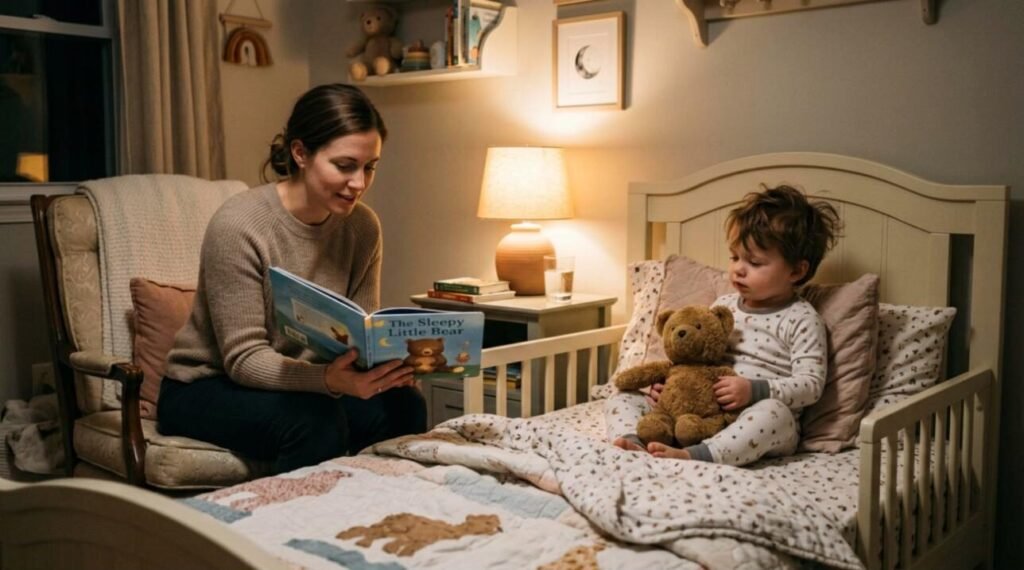
The chair method is a gentle way to help a toddler learn to fall asleep on their own, while still keeping you close. You sit in a chair next to your child’s bed at bedtime, then move the chair a bit farther away every few nights. You stay calm and visible so your child doesn’t feel scared being alone.
This works well for families dealing with bedtime battles. It avoids a sudden goodbye that can make a toddler upset. Instead, you stay a quiet, comforting presence. Your child learns that they can fall asleep without being held, rocked, or fed to sleep.
How to do the chair method, step by step:
- Put a chair right next to your toddlers bed on the first night.
- Sit quietly while they fall asleep. Keep interaction to a minimum.
- Every two to three nights, move the chair a few feet closer to the door.
- Next, put the chair in the doorway, then just outside the room.
- Once your child can fall asleep on their own, take the chair away altogether.
Each step lets your child get used to the change before you move on. If you rush, it might make your toddler get up more often and bring back the bedtime fights.
Does the chair method build trust?
Yes, trust is the heart of this method. You can promise to check on your child and then do it. Keeping that promise helps your toddler feel safe, even when you’re not right there. Where the chair sits is less important than being steady and loving each night.
This way respects your child’s development while staying emotionally close. It’s never too late to set kind boundaries around sleep and help your toddler grow into a confident sleeper. Our stay in bed chart works well alongside the chair method by letting your child see their progress visibly.

How does a stay-in-bed chart encourage good sleep?
A stay in bed chart makes the bedtime goal clear and easy for your child to track. Kids ages 2 to 6 respond well to seeing their progress. When you mark a sticker on the chart the next morning after a good night, your child connects their effort with a reward they can see. This helps keep momentum going. The chart shows every success and encourages your toddler to keep up the streak.
What makes a reward chart work well?
It’s simple. You set a clear, doable bedtime goal. When your child meets it, they get a sticker on the chart the next day. Seeing and touching the reward right after makes it meaningful. As your child grows, you can raise the goals little by little to build their confidence. The chart turns bedtime from a fight into a shared team effort.
How does a printable chart fit a screen-free bedtime?
Printables keep the routine off screens completely. Our Brave in My Bed chart comes as an instant PDF download. You can add your child’s name before printing, so they feel special and in charge from the start. No app buzzes or blue lights interfere. The chart stays in your child’s room as a gentle reminder of what you’re working on together.
What if my child slips up and leaves the bed?
The chart handles setbacks with kindness. If there’s a blank spot, it just waits for the next try. This helps avoid starting over and losing all progress. Your child can see all their past wins, and that proof keeps them going, even after a rough night.
What gentle steps work when my toddler won’t stay in bed?
Gentle bedtime steps focus on comfort and teaching self-soothing, not punishments. There are many reasons a toddler won’t stay in bed, but small, steady tools often end the struggles without more stress. Skipping these can drag bedtime battles on much longer and drain everyones sleep.
What comfort items help toddlers feel safe at night?
A comfort object gives your child something familiar to hold when things feel too quiet or dark. We include a comfort heart in our bedtime printables that “holds my hug” for your child. A favored stuffed animal or soft blanket can replace the feeling of a parents presence, which is exactly what a sleepy toddler needs in the night.
How does a wake-up plan stop toddlers from leaving bed?
A wake-up plan gives your child a simple, calm routine when they wake up and feel scared or restless. Instead of running out, they can hold their comfort item or take three slow breaths. We add this idea in our storybooks and charts so toddlers have a step-by-step they can use alone. This interrupts the urge to get up and helps them learn to stay calm on their own.
Teaching these skills helps your child more than just with sleep. Using a stay in bed chart turns bedtime goals into something a preschooler can see and understand. Our printable charts and storybooks are screen-free and designed for ages 2 to 6. For kids with bigger nighttime fears, we have simple ideas for children who are scared of the dark to make their rooms feel safer before lights go out.
Conclusion
When your toddler won’t stay in bed, a gentle plan that feels steady and safe is what works best. The chair method helps build trust slowly. Our Brave in My Bed chart shows your child’s progress. Comfort items and a wake-up plan give your child tools for middle-of-the-night moments. Pick one approach and start tonight. Your child will learn that bedtime isn’t a fight, but a skill they can master.